
Nunavut Energy
The Nunavut Energy Landscape
Our Journey How Did We Get Here?
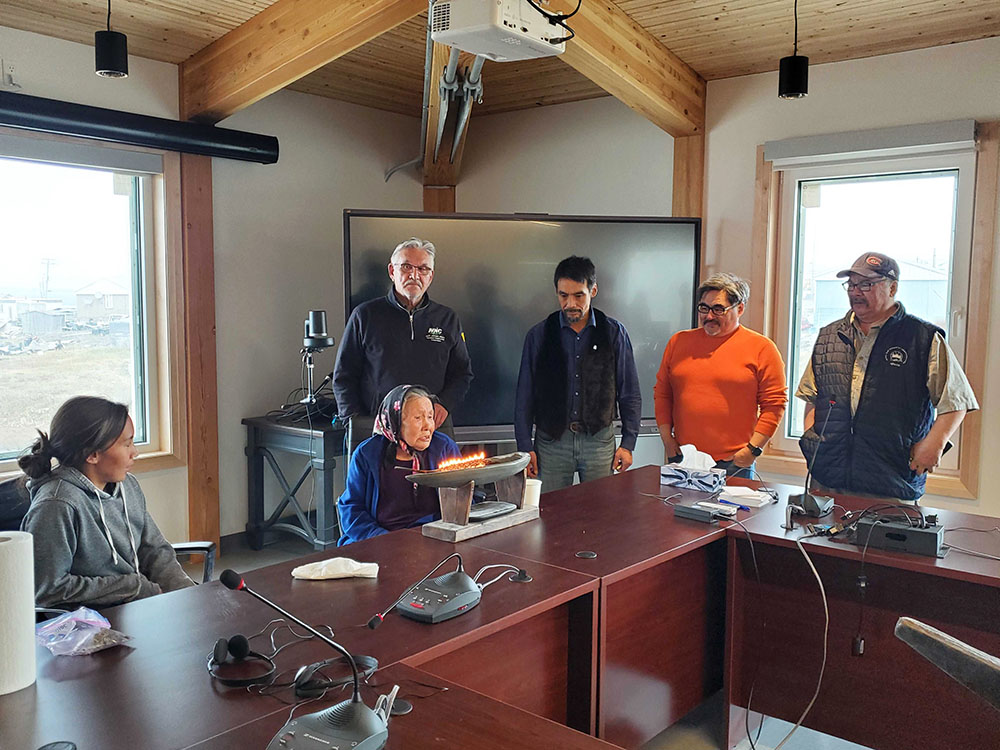
Inuit have always been innovative in providing light and heat, even before the invention of electricity. The qulliq—a traditional lamp and heat source—has been used by Inuit for centuries to heat and light their surroundings. Carved from soapstone, with arctic cotton or moss for a wick, and fuelled most often by sea animal oil, the qulliq represents Inuit intelligence and resourcefulness. Using local renewable resources made survival in the Arctic possible.
By the 1950s, diesel power plants were being introduced to Nunavut, mostly by the Canadian federal government and the military. Once the Nunavut Land Claims Agreement was signed and Nunavut became its own Territory, those diesel power plants were transferred to the crown-owned electricity utility (Nunavut Power Corporation at first, now Qulliq Energy Corporation), which continues to own and operate them today.
This transition to diesel power came with mounting pressures put on Inuit by Southern governments and churches to live in one place year-round, representing a significant change to traditional Inuit culture. Nunavummiut did not get to decide whether the power plants should be built, where they would be built, or who would benefit or be impacted by the power plants. This process does not reflect free, prior, and informed consent.
As a result, Nunavut is now burdened with operating old diesel generators that are expensive and challenging to take care of. This leads to power outages and quality issues, very high power bills, and a forced reliance on imported fossil fuels that harm our environment.
While the use of diesel power plants may have propelled the Territory’s growth to its current population, diesel fuel only stands to become more expensive and more scarce. Continuing to rely on it stands in the way of Nunavummiut thriving. At NNC, it’s our belief that we need to go back to our roots—the Inuit-led innovation we see with the qulliq, and looking for alternative energy sources all around us. This is how we power our future for generations to come, in a way that not only protects, but honours the land.

Diesel in Our Communities What’s the Downside of Diesel?
Diesel is reliable and efficient for electricity generation, which made it a reasonable choice at a time when there weren’t other options. However, there are big risks that come with diesel that impact the environment, our financial situation, and the social and cultural health of our communities.
- Since diesel fuel is shipped to the Territory, diesel spills into our waters can happen, which could seriously harm ecosystems and the animals and plants that depend on them.
- Burning diesel fuel also creates toxic air pollution that harms the land, water, and plants that wildlife in Nunavut rely on.
- The cost of diesel fuel keeps going up. This causes frequent increases to our electricity bills in Nunavut, taking up more and more of our monthly budgets.
- The Government of Nunavut spends tens of millions of dollars every year subsidizing diesel electricity generation. That money could instead go towards other important needs in the Territory, like education, healthcare, or food security.
- Emissions from burning diesel are carcinogenic—breathing these in every day risks our own health.
There are other ways we can generate electricity in Nunavut that cost less, have fewer environmental impacts, and support healthy communities. NNC explores all the options, and develops those that are chosen by Nunavummiut to ensure lasting benefits for many generations to come.


Energy Today How is Energy Generated in Nunavut Right Now?
Nunavut is 100% reliant on diesel fuel for its electricity. However, diesel is not produced in Nunavut. So how does this system work?
First, the Petroleum Products Division of the Government of Nunavut buys diesel fuel from southern markets, pays southern companies to ship it to Nunavut, and then sells it to Qulliq Energy Corporation. The diesel fuel is stored in tanks in every community in the Territory. It gets piped into QEC’s diesel generators, which burn the diesel fuel and convert mechanical power to electricity. That electricity is sent from QEC’s diesel power plants, through power lines, to all homes and buildings in Nunavut.
QEC is responsible for providing Nunavummiut in every community with safe, reliable, affordable power, 24/7. Homeowners, businesses, and governments pay QEC for the electricity they use. Revenue from customers covers about half the cost of electricity generation; the other half is covered by Government of Nunavut subsidies.
Standing Up Together NNC’s Advocacy Record
NNC and its parent company, Qikiqtaaluk Corporation, have advocated over many years for fair renewable energy policies and programs. These formal frameworks are what make Inuit-led renewable energy projects in Nunavut possible and successful.
After QC created NNC as a wholly-owned subsidiary to focus on the renewable energy sector, it became clear there were many challenges to successful Inuit-led renewable energy projects. The most challenging of all was the lack of a regulatory pathway.
In 2019, NNC started speaking up about the need for fair renewable energy policies and programs within the Territory. We spoke with stakeholders and Rightsholders to understand the adjustments needed for a pathway to success. NNC worked side by side with the other Regional Inuit Development Corporations and Regional Inuit Associations in the Kivalliq and Kitikmeot, as well as Nunavut Tunngavik Inc., to centre the needs of Inuit in this dialogue with the Government of Nunavut. Our advocacy aimed to ensure the spirit of the Nunavut Agreement was upheld in Territorial renewable energy policies and programs.
QEC’s Commercial and Institutional Power Producer Program was implemented in 2021 and QEC’s Independent Power Producer Program was implemented officially in 2023. Many Inuit leaders worked tirelessly so that these programs reflect the best interests of Inuit. NNC is proud to have played a small role in this collective effort. Learn more below!
Programs & Supports What Renewable Energy Programs Exist in Nunavut?
Over the last few years, several policies and programs have been set up for Nunavummiut to support the growth of renewable energy in the Territory, ranging from supports for cabin owners installing off-grid solar systems, to Inuit-owned companies building community-scale projects.
Nunavut Climate Change Secretariat Renewable Energy Cabin Grant Program
The Government of Nunavut’s Climate Change Secretariat has a Renewable Energy Cabin Grant Program that helps eligible cabin owners to lower the cost of installing a renewable energy system on their cabin. A one-time, non-repayable grant of up to $5,000 is available for each cabin owner. Visit the Nunavut Climate Change Secretariat’s website for more information on this program.
QEC’s Net Metering Program
Qulliq Energy Corporation has a Net Metering Program allowing eligible residential customers and two municipal accounts per hamlet to generate their own electricity from renewable energy sources. Customers enrolled in the program receive credits for excess energy generated by their renewable energy systems that has been fed back to QEC’s electricity system. This allows customers to reduce the amount of electricity purchased from QEC. Visit QEC’s website for more information on this program.
QEC’s Commercial and Institutional Power Producer Program
Qulliq Energy Corporation’s Commercial and Institutional Power Producer (CIPP) Program allows existing commercial customers (business owners) and institutional customers (Hamlet and government buildings) to generate electricity using renewable energy systems and sell it to QEC. Visit QEC’s website for more information on this program.
QEC’s Independent Power Producer Program
Qulliq Energy Corporation’s Independent Power Producer (IPP) Program allows Inuit-owned organizations to generate electricity using renewable energy systems and sell it directly to QEC. Inuit-owned IPPs must meet QEC’s technical requirements for installing and selling electricity to QEC, and must be approved by QEC to participate. Visit QEC’s website for more information on this program.
Looking Ahead What’s the Vision for Energy in the Future?
Maligait in Inuktitut means “living a good life”, which is described as the purpose of being in Inuit culture.
Maligait is the foundation that led Inuit elders to the societal values that form Inuit Qaujiamajtuqangit. Both Maligait and Inuit Qaujimajatuqangit are central to NNC’s development practices and the clean energy transition in general.
When we look towards the future of energy in Nunavut, we look to implement energy solutions that align with Maligait, Inuit Qaujimajatuqangit, and community priorities.
There are four laws of Maligait:
1. Working for the Common Good
Diesel creates harms to the environment, human and animal health, and our shared finances, affecting communities across the Territory. Shifting towards a cleaner, more affordable energy source will benefit all Nunavummiut and will work for the common good.
2. Respecting all Living Things
All living beings depend on clean air, water, and soil. Depending on diesel risks all three, through the fumes that come from burning it, and the spills that can take place during shipment and storage. Transitioning to a cleaner energy source demonstrates holistic respect for all living things.
3. Maintaining Harmony and Balance
Reducing our greenhouse gas emissions (which cause climate change and disrupts natural ecological cycles) reestablishes harmony and balance within the natural world. Inuit-ownership of renewable energy infrastructure also enhances economic balance within Nunavut.
4. Continually Planning and Preparing for the Future
Shifting now towards a cleaner, more affordable energy source sets up future generations of Nunavummiut for success, Inuit sovereignty, and maximum benefits.
Working with Governments Is the Renewable Energy Transition Supported by Governments?
The short answer: yes! Read more below to see how the different levels of government have included renewable energy development in their strategic planning.
Nunavut Arctic Sovereignty and Security Strategy
Nunavut Tunngavik Inc. and the Government of Nunavut together developed the Nunavut Arctic Sovereignty and Security Strategy in 2025, which unifies both their visions for Nunavut’s future security, grounded in the values and priorities of Inuit. The Strategy underscores the central role Inuit have in defining Canada’s claim to the North and confirms that Arctic Security cannot be achieved without Inuit Sovereignty.
Major projects, including the Iqaluit Nukkiksautiit Project, are identified as critically needed infrastructure within the strategy to advance Inuit Sovereignty and Arctic Security in Nunavut. In order to support one of the fastest growing populations in the country, Nunavummiut must have access to affordable and accessible energy. It will reduce the cost of living burden in the North and allow Nunavummiut to focus on what really matters rather than their power bill. The future of Nunavut is bright when we prioritize critical infrastructure to enable a thriving Territory.
National Inuit Climate Change Strategy
Inuit Tapiriit Kanatami (ITK) published a National Inuit Climate Change Strategy in 2019 that aims to strengthen the sustainability and resilience of communities across Inuit Nunangat in the face of a rapidly changing climate and landscape. The purpose of the strategy is to outline core, Inuit-determined actions that protect Inuit culture, language, and way of life.
Its five priority areas are:
- Knowledge and Capacity Building
- Health, Well-being, and the Environment
- Food Systems
- Infrastructure
- Energy
Regional and community-driven energy solutions for Inuit energy independence are specifically highlighted. The projects NNC develops align with these interconnected priority areas. They stand to demonstrate the positive change that can be achieved when Rightsholders and stakeholders work together on a lower-carbon economy that includes off-grid Inuit communities.
Federal Net Zero Strategy
The Government of Canada acknowledges that greenhouse gas emissions are harmful to our environment and action needs to be taken to reduce these harmful impacts. It has implemented several strategies, plans, and laws to incentivize and require the ongoing reduction of carbon emissions across the country.
Central to the federal Net Zero Strategy is the Canadian Net-Zero Emissions Accountability Act, which commits the federal government to achieving net-zero emissions by 2050. This statute ensures transparency and accountability as the government works to deliver on its targets.
The federal government has also established:
All reflect input from provinces, territories, Indigenous Peoples, the Net-Zero Advisory Body, and the general public on what is needed to reduce emissions in Canada by 40-45% from 2005 levels by 2030.
While industry represents a large portion of our emissions in Canada, electricity production continues to contribute to greenhouse gas emissions in certain places. As Nunavut is 100% reliant on diesel fuel for electricity generation, our carbon footprint for electricity generation remains one of the highest in the country. The clean energy transition in the Territory aligns with Canada’s goals to reduce our carbon emissions, to reduce harm to the environment, and reduce the impacts of climate change that are felt more intensely in the Arctic than they are in southern Canada.
Guiding Laws Which Laws Apply to Renewable Energy Development in Nunavut?
Nunavut Land Claims Agreement
The Nunavut Land Claims Agreement (NLCA or Nunavut Agreement) is a contract between Inuit in Nunavut and the Government of Canada that defines the Rights and benefits of Inuit in Nunavut. The Nunavut Agreement guarantees the Rights of Inuit beneficiaries within the Nunavut Settlement Area (Territory of Nunavut) including Rights to harvesting, employment opportunities, economic development, and co-managing natural resources. The Nunavut Agreement also legally defines how Inuit must be consulted and involved in decision-making about resource development in the Territory. This includes requirements for the negotiation of Inuit Impact and Benefit Agreements. These processes and requirements apply to any renewable energy development in Nunavut as well. Project leaders must uphold the Rights of Inuit under the Nunavut Agreement during any kind of study, development, construction, and operation of renewable energy systems in Nunavut.
Qulliq Energy Corporation Act
The Qulliq Energy Corporation Act is the governing legislation that defines the role and responsibilities of Qulliq Energy Corporation (QEC), the sole electrical utility in Nunavut, which is owned by the Government of Nunavut. The statute defines the objectives of QEC, how electricity rate increase requests are reviewed and approved, how major capital projects (diesel power plants) are reviewed and approved, and the financial powers of QEC. It also defines how electricity is generated, distributed, and sold in the Territory. Any organization looking to participate in the electricity sector in Nunavut must follow the regulations established under the QEC Act. The statute provides QEC with the authority to create programs that allow renewable energy development by eligible groups (must be majority-owned by Inuit).
Utility Rates Review Council Act
The Utility Rates Review Council Act establishes the Utility Rates Review Council (URRC)—an advisory body to the Minister Responsible for QEC. The Minister, along with the Government of Nunavut’s Cabinet, is ultimately responsible for setting electricity rates in the Territory. They may request the URRC’s help to review applications from QEC for rate increases and give recommendations. The URRC is a key stakeholder in determining electricity rates in the Territory.
Constitution Act
The Constitution Act defines Canada’s federal parliamentary democracy. It lays out the powers of federal, provincial, and territorial governments; the Senate; the House of Commons; while also recognizing Indigenous Rights. Section 35 of this statute affirms the Rights of Inuit as defined by the Nunavut Land Claims Agreement. With this affirmation comes the responsibility of the federal government to ensure Inuit have been appropriately consulted before any resource development projects are permitted to proceed. This duty to consult exists on renewable energy projects and other types of resource development projects in the Territory, such as mines or commercial fisheries development.
Nunavut Planning and Project Assessment Act
The Nunavut Planning and Project Assessment Act (NuPPA) defines the review and approvals process for resource development projects in Nunavut. The Nunavut Planning Commission (NPC) and Nunavut Impact Review Board (NIRB) are both established through this statute.
NuPPA has a “single window” approach to the review process, which requires all project leaders to submit an application to the NPC. All future reviews, authorizations, permits, and licenses for a given project flow from that starting point. NuPPA also sets out how long it takes to complete the environmental assessment process and the roles and authorities of Inuit, the federal government, and the Government of Nunavut. Renewable energy projects are required to abide by this statute and all reviews, authorizations, permits, and licenses for a renewable energy project will be issued through NuPPA.