
Sanikiluaq
This wind and battery project – named Anuriqjuak (big wind, in Inuktitut), by local youth – is almost finished. Once it gets connected to the grid and the wind is blowing, Sanikiluaq will be able to turn off its diesel engines! The wind turbine, battery, and diesel plant will all work together to make sure Sanikiluarmiut have steady, safe, and reliable power. Every year, 20% of the project’s profit will go directly back to the community to spend on what people need most.

QUICK LINKS
Statistics
Estimated Cost: $30 M
Target Construction Start: October 2023
Target First Power: October 2026
Proposed Energy Supply: Wind Turbine + BESS
Funding:
Natural Resources Canada: CERRC – Demonstration
Qikiqtani Inuit Association: ICIF
Population
Peak Electricity Demand
Proposed Source
Diesel Offset
Statistics
Estimated Cost: $30 M
Construction Start: October 2023
Target First Power: October 2026
Proposed Energy Supply: Wind Turbine + BESS
Population: 1,100
Peak Electricity Demand: 774 kW
Proposed Source: 1 MW
Diesel Offset: 50-70%
Funding:
Natural Resources Canada: CERRC – Demonstration
Qikiqtani Inuit Association: ICIF
Project Story
The story of Nunavut Nukkiksautiit Corporation and the story of the Anuriqjuak Nukkiksautiit Project are woven together. Sanikiluaq, located on the Belcher islands in the southeastern part of Hudson Bay, is known for being a very windy place. Sanikiluarmiut could see the opportunity to transition away from diesel and in 2016, made a request to our parent company, Qikiqtaaluk Corporation, for support on harnessing the wind to reduce diesel reliance. As a result, NNC was formed to respond to this need.
In 2023, after many years of advocacy and negotiations, NNC signed Nunavut’s first Energy Purchase Agreement with Qulliq Energy Corporation, outlining how wind energy will be bought and sold in Sanikiiluaq. This was an exciting and historic event.
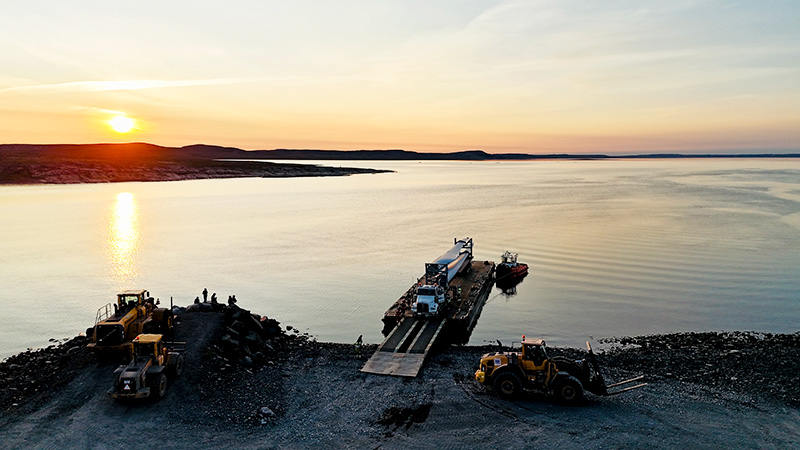
Construction on the 5km road that leads to the wind turbine began in 2023 and was finished in 2025. The 1 MW wind turbine arrived on the sea lift in 2025 all the way from the Netherlands, and the transmission line that will bring electricity from the turbine to the QEC power plant was put up. Construction continues in 2026 to install the turbine at the site, install the battery, and build the e-house (the place where electrical controls are, for connecting the wind energy into the community’s microgrid).
As the first project of its kind in Nunavut, Sanikiluaq is leading the way. This project provides a map for other communities to follow, by showing how a wind and battery system can work in the Arctic. It proves that by working together, we can stop relying so much on diesel. This makes the community’s energy more secure and gives Inuit more control over their own future.
Impacts & Benefits
One of our most important jobs is to understand how a project might change the land, water, air, plants, and animals. We also look at how it might affect the ways Inuit use their Rights under the Nunavut Agreement.
Full Story
The first three phases of the project helped us understand it in detail, along with possible impacts and/or benefits. We looked at environmental impacts, new jobs, and social benefits.
To understand these potential changes, we:
- Worked with the local Sanikiluaq Hunters and Trappers Association (HTA) to make study plans.
- Sent teams of scientists and Inuit guides to the site to learn together.
- Collected and analyzed data.
- We built a financial model for the project, to understand what profits we can expect to earn year after year from selling wind energy to QEC.
Before any construction took place, we needed to understand the current state of the environment and the community, and how they might change. Inuit Qaujimajatuqangiit was integrated into the study findings, by Inuit, to make sure that things made sense with respect to what Inuit know to be true.
After defining what potential impacts the project could cause, NNC submitted the project for NIRB screening and was successful. That meant that the potential project impacts were acceptable and NNC was given permission to build the project. We also created a Community Enhancement Fund, so that 20% of the project’s annual profits go directly to Sanikiluarmiut for community improvements of their choice. A committee made up of community leaders from all major organizations in the community accepted the role of governing that fund.


Overview Community Engagement

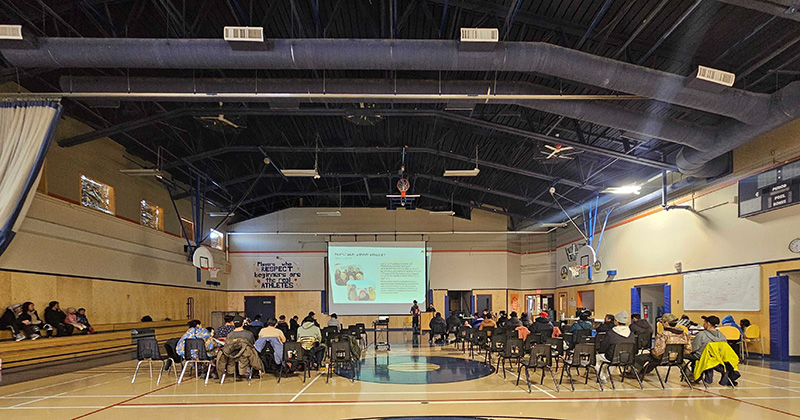
Working together with Sanikiluarmiut is the most important part of the Anuriqjuak Nukkiksautiit Project. NNC began community engagement in Sanikiluaq a decade ago to understand the local wind and how it could be used for electricity. We started by setting up a tall tower to collect wind data. At the same time, we began meeting with the Hamlet Council, the Hunters and Trappers Association (HTA), and community members. These early meetings helped us learn what people wanted for their land and community, and to answer any questions about how wind turbines work.
Our plan for talking with the community came together over years of responding to the requests of Sanikiluarmiut and now follows the seasons of Inuit culture. In the spring, we meet with the HTA to plan our work for the summer together. In the fall and winter, we host meetings with Inuit leadership to share what we learned and did during the summer season, ask and answer questions, and listen to feedback. This process makes sure that Inuit Qaujimajatuqangit (Inuit knowledge) is the guiding force behind the project.
We also focus on hiring and training local people to work on the project, which creates new jobs right at home. Local company Gary’s Equipment has been central to the construction phase.
IAC Inuit Advisory Committee
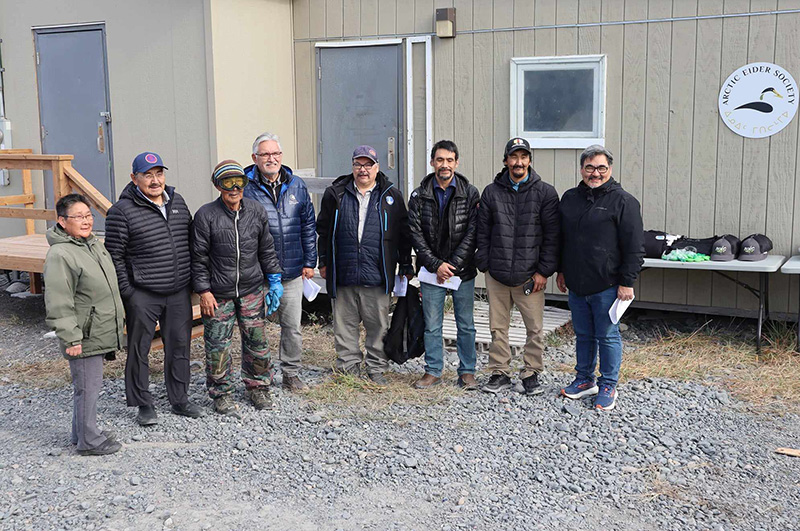
As projects mature, there is a need for Inuit leadership representing different community interests to come together, provide guidance, and make decisions. How that looks in each community can be different. In Sanikiluaq, a committee for this purpose was formed in 2025 by the pre-existing Qikiqtait Steering Committee. They named it the Ullumailjaalirijikkut Committee (UC), meaning wind turbine committee, in Inuktitut. On the UC there are representatives from the HTA, Hamlet Council, youth, and elders; together, they govern the project’s Community Enhancement Fund.
Every year, NNC will provide financial summaries to the UC, so there is full transparency on how much money the project earned, the cost of operations and maintenance, and how much profit was left over. From there, 20% of the profits will go into a separate bank account, managed by NNC, to minimize administration duties for Sanikiluarmiut.
The funds can be spent however the community wishes. Depending on priorities, we could see things like financial support for youth programs in the community, the community food bank, purchasing new equipment for the school, etc. NNC will work closely with the UC to determine how the Community Enhancement Fund can best benefit Sanikiluarmiut.

Phase Gate Development Process
This diagram shows how the project gets developed from start to finish. It’s called a phase-gate process because it breaks up the work into six phases with a decision gate in between each phase. A phase is a body of work, defined by a particular goal. A decision gate is a time when we look to Inuit leadership and the public for their consent on moving forward. NNC follows this process for every community project, and is always looking for ways that it can be improved.
NNC works with the project team to complete a phase. Then, we show that work to the community. To move through the decision-gate and on to the next phase, we have to find out whether or not Inuit are comfortable with progress and want us to proceed. There are three possible responses we could receive from Inuit at a decision-gate:
- No, we don’t want this—stop work.
- We want you to keep going, but we’re not happy with this outcome—try again.
- Yes, we like this—continue.
In the case of Sanikiluaq, the community was pushing for this project to be built right from the beginning. We consistently heard from Inuit leadership in Sanikiluaq that they were in support of the development activities and looked forward to the project being built.

1. Identify Opportunity
First, we needed to understand the possibility of developing a wind project for the community. This meant taking a look at existing data we had access to from the government, Inuit Organizations, and other groups involved in understanding local natural resources.
Phase 1 happened between 2016 and 2018.
Decision Gate
We shared this early study work with Inuit leadership. The Presidents of Qikiqtaaluk Corporation and the Qikiqtani Inuit Association used this to direct NNC on going forward with finding all the options for wind energy development.
2. Feasibility
Next, we looked at all the options for where a wind turbine could go. The land, water, wind, and sun around every community is unique. We needed to carefully consider how to maximize energy production, displace as much diesel as possible, and minimize impacts to the environment and Sanikiluarmiut way of life. NNC installed a meteorological evaluation tower, with instruments at the top for measuring the wind strength and consistency.
Phase 2 took place between 2018 and 2020.
Decision Gate
We shared this more detailed study work with Inuit leadership. The Sanikiluaq HTA and Hamlet Council approved the location, and the Presidents of Qikiqtaaluk Corporation and the Qikiqtani Inuit Association directed NNC to keep going to the next phase.
3. Engineering + Impacts & Benefits Assessment
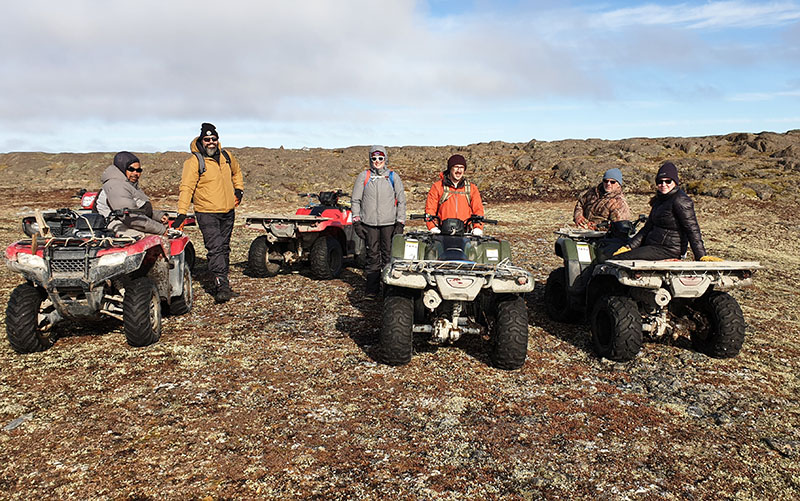
Once the location was chosen, the engineers got to work. Teams of scientists and Inuit knowledge holders make study plans together. They spent time at the site and learned together about the land, water, wind, sun, animals, plants, rocks, and Inuit artefacts from long ago. This fed into design and engineering, which, in turn, allowed us to create a business case for the project. We also did a socioeconomic study to see how the project would affect life in the community, the cost of living, opportunities for local businesses, and employment.
Community engagement continued with meetings, updates, and social media posts. Everything was shared with the HTA and Hamlet Council and interpreted through an Inuit Qaujimajatuqangit lens.
Phase 3 was completed between 2020 and 2022.
Decision Gate
At this point, we had a strong understanding of what the project would look like, how it could be built, possible environmental impacts that could be expected, and strategies for minimizing them backed by Inuit knowledge. We also had started work on a framework for a community benefits-sharing plan.
We asked the HTA and Hamlet Council: Are the impacts and benefits of wind energy acceptable in comparison to the impacts and benefits of diesel? Is there support for the project to proceed to permitting for construction? The answer was yes.
4. Permitting and Financial Readiness
By this time, we had completed all preliminary work. We received clear support from Inuit that, yes, we should share the project plan with NIRB for legal environmental assessment, and to request permission to build the project. Our goal was for the submission to reflect a project that was co-developed with Inuit and represented what the majority of Inuit wanted. We waited for NIRB to consider all the information, move through their screening process, and make a decision.
In the meantime, NNC negotiated and signed commercial contracts with QEC to decide how wind energy can be bought and sold, and connect into the existing grid for the community to use. We also framed out a financial plan for building the project, so we would be ready, in the case that we got NIRB approval. This involved talking with lenders, banks, the Government of Canada, and possible business partners who could put money in.
Phase 4 was completed by 2023.
Decision Gate
NIRB released the project from environmental assessment and granted permission to move forward. We took that decision to Inuit leadership and the Presidents of QC and QIA directed NNC to invest in the construction of this project.
5. Construction
It’s time to build the project!
Starting in 2023, this phase has brought a lot of activity, and jobs for Inuit. A road had to be built out to the site, along with a distribution line to carry wind energy to the QEC plant.
We started the process of training local youth interested in helping maintain and operate the wind turbine. A group of 10 Sanikiluarmiut did a 2-week program that brought them to Gaspé, Quebec in the summer of 2025 to find out if they’d like to become assistant wind turbine technicians. We will look to identify a smaller group wanting to take on the full certification program, in the near future.
Lots of electrical work has to happen at the connection point so that all the difference energy sources can “talk to each other” and the grid can work safely. Infrastructure (including the wind turbine and battery) was brought into the community and will be installed in 2026.
6. Asset Operation
After construction is completed, we’ll be ready to “flip the switch” and send wind energy to the community. This is the moment that everyone has waited for.
Power will be sold to QEC, and QEC will sell it to their customers, as they always have. Once up and running, the new infrastructure will need workers to keep everything running smoothly, fix problems when they arise, and take care of routine maintenance.